



10 Person Tents
10 person tents are built for big families, two families sharing a pitch, or a group of friends who want one base camp instead of a row of small tents. Most give you two or three separate bedrooms plus a living area tall enough to stand up in, so there is room to sleep, cook under cover and sit out a wet afternoon together.
Below you will find tunnel, cabin, dome and inflatable designs side by side. Compare floor size, peak height and waterproof rating before you buy. Need a little less room? See our 8 man tents, or browse 3 bedroom tents if separate sleeping areas matter most.

Vidalido Ansan-Khaki-Plus (8-10 Person, Khaki)
Vidalido
- 8-10 person capacity
- Two room design
- Extended front vestibule
- 1500mm waterproof coating
- Dual mesh windows

Coleman Skydome Dark Room Tent (10-Person, PFAS-Free Vine)
Coleman
- Blocks 90% sunlight
- 5-minute colour-coded setup
- Fits 3 queen airbeds
- WeatherTec waterproof system
- 35mph wind resistance
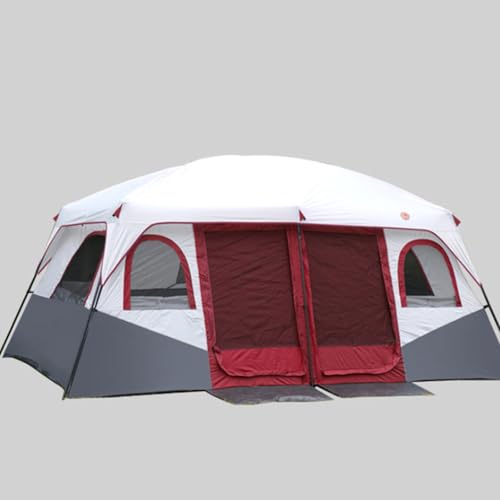
QJWM 8-12 Person 3 Season Camping Tent (Red/Blue)
QJWM
- Accommodates 8-12 people
- Separated room with curtain
- 6 mesh windows
- 3-minute setup time
- 4800mm water resistance

Berghaus Kepler 9 Nightfall (Grey, 9 Person)
Berghaus
- Nightfall darkened bedrooms
- Quick inflatable air beams
- 6000mm waterproof rating
- Built-in enclosed porch
- Three separate bedrooms

KTT Extra Large Tent (Green, 14 Person)
KTT
- Accommodates 14 people
- Two separate rooms
- Three doors access
- 2000mm water resistance
- 7.4ft centre height

Vidaxl Family Tent (Grey And Orange, 9-Person)
Vidaxl
- Accommodates 9 people
- Quick-release setup system
- Water-resistant 1500mm coating
- Pre-attached aluminium poles
- Mesh ventilation walls

Campros CP Camping Tent 10 Person Family Cabin Tent (Blue)
Campros CP
- Sleeps up to 10 people
- 72-inch standing height
- 1000mm waterproof rating
- Mesh roof for stargazing
- 15-minute quick setup
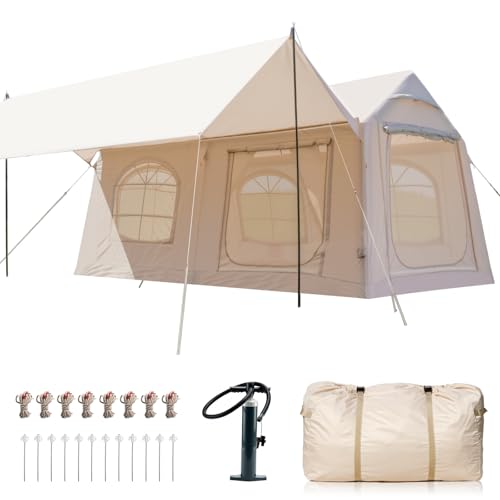
Ytaoeo Inflatable Tent 10 Person (10 Person + Canopy)
Ytaoeo
- 5-minute inflatable setup
- Waterproof 3000mm coating
- Two-room design
- Stove jack included
- UPF 50+ protection
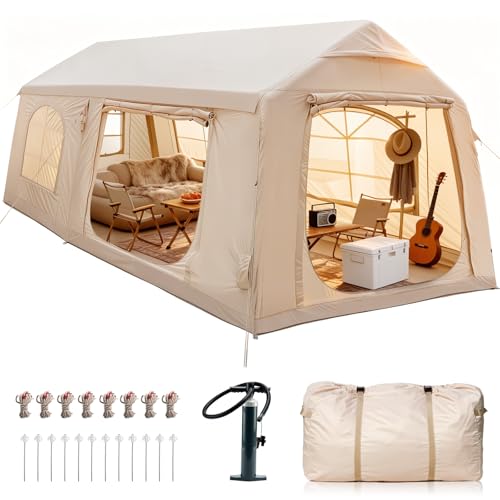
Ytaoeo Inflatable Tent 10 Person (420cm x 310cm x 210cm)
Ytaoeo
- Inflates in 5 minutes
- 420D Oxford waterproof fabric
- UPF 50+ UV protection
- Two room design
- Wood stove jack included

WaldWander Inflatable Tent (Green, 6-10 Person, 400 x 300 x 200 cm)
WaldWander
- Inflates in 5-10 minutes
- 3000mm waterproof rating
- 12 square metre floor space
- No poles required
- Hand pump included

Skandika Montana 8-10 Person Tent (Blue, 700 x 310 x 200cm)
Skandika
- Sleeper Technology blocks light
- Accommodates 8-10 people comfortably
- 5000mm waterproof rating
- Three separate sleeping cabins
- Multiple entrances and windows
A tent sold as sleeping ten is the largest size most UK family camping brands make. It is a big purchase and a big object: the footprint can be longer than a car, the packed bag can weigh as much as a child, and the 10-person label tells you far less than you might think. This guide explains what that rating really means, how the main tent types compare, and which specs to check, using real figures from the tents in our range.
How many people really fit in 10 person tents?
Manufacturers count berths by laying standard sleeping mats side by side across the whole floor, with no gaps and no room for bags. A typical mat is about 60cm wide and 190cm long, so ten of them need roughly 11.4 square metres. The Ytaoeo 10 person air tent has a 420 x 310cm floor, about 13 square metres in total, which shows how little space is left once everyone is lying down.
A sensible rule of thumb is to take about two thirds of the rating for adults. So most 10-berth models suit six or seven adults with their kit, or a family of four or five who want proper living space and room for airbeds. Children take up less room, so two families with young kids can usually share one comfortably.
- Six to seven adults with sleeping mats, bags and a small table.
- Four to five people with double airbeds, camp beds or a cot.
- Ten people only for festival-style sleeping, with gear in the car.
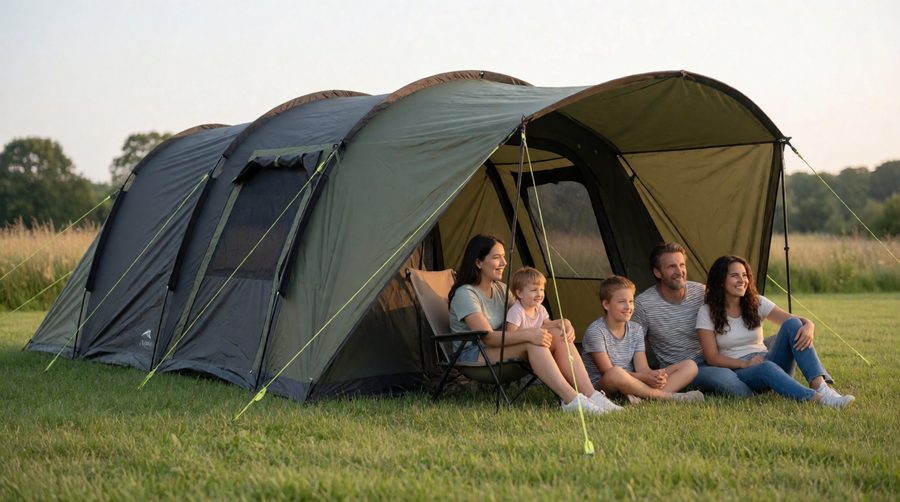
8, 10 or 12 berth: which size do you need?
The jump from an 8 to a 10 berth tent is usually an extra bedroom or a longer living area, not just a wider floor. Here is how the sizes tend to work out in practice:
- 8 berth: a family of four to six, usually two bedrooms and a living area. Lighter and fits any standard pitch.
- 10 berth: a family of five or six with space to spare, or two small families. Often two or three bedrooms and room for a table that seats everyone.
- 12 berth and up: two full families or a big group. Expect a heavier tent, a longer pitch and a bigger bag.
If you camp once or twice a year with four people, a 10-person tent can feel like more work than it is worth. If you camp for a week at a time, the extra living space is what makes a rainy day bearable.
Types of 10 person tent
10 berth tents come in five main designs. The shape decides how much of the floor you can actually stand up on, how long it takes to pitch and how it copes with wind.
Tunnel tents
Tunnel tents use a row of parallel hoops, with bedrooms at one end and a long living area at the other. They give the most usable space for their weight and stand up well to wind when pitched tail-on to it, but they need every guy line pegged out to stay up. The Berghaus Kepler 9 is a classic example. Our 6 man tunnel tents use the same layout on a smaller scale.
Cabin and instant tents
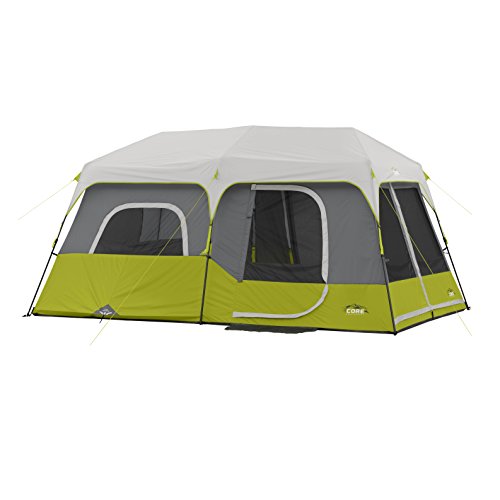
Cabin designs have near-vertical walls, so you can stand up almost to the edges. Many are instant tents with poles already fixed to the fabric: you unfold the frame, extend the legs and click it into place. Camping Guidance measured the Core Straight Wall Cabin 10 at 90 inches (229cm) at the peak and 65 inches (165cm) even in the corners. The trade-off is a tall, boxy shape that catches the wind more than a tunnel.
Dome tents
Dome models cross two or more poles over the top, so they are freestanding and quick to move around a pitch. They are usually the lightest option at this size, but the sloping walls cut headroom near the edges. See our large dome tents for more.
Inflatable (air) tents
Air tents replace poles with inflatable beams that you pump up. Nothing snaps, pitching is fast and one person can manage it. Several in our range also include a stove jack, a fireproof port for a tent stove flue. They cost more and pack heavier, and a punctured beam needs the repair kit. Compare these with our 6 berth inflatable tents.
Bell tents
A 5m or 6m canvas or polycotton bell tent sleeps a large group under one central pole, with a high peak and a cooler, more breathable feel. They suit glamping and long stays but have no separate bedrooms. Browse our bell tents if you like the look.
10 person tents compared
These figures come straight from the specs of tents in our range. Shops rarely list them side by side, but they are the numbers that matter most.
| Tent | Type | Sleeps | Floor (L x W) | Peak height | Weight | Waterproof rating |
|---|---|---|---|---|---|---|
| Coleman Skydome Dark Room | Dome | 10 | 490 x 270cm | 200cm | 12.6kg | 3,000mm |
| Ytaoeo Inflatable Tent | Air, 2 rooms | 10 | 420 x 310cm | 210cm | 15.6kg | 3,000mm |
| Campros CP Family Cabin | Cabin, 2 rooms | 10 | 488 x 274cm | 183cm | 11.8kg with fly | 1,000mm |
| Vidalido Ansan Plus | Cabin, 2 rooms | 8-10 | 400 x 300cm | 205cm | 12.6kg | 1,500mm |
| QJWM 8-12 Person | Cabin, 2 rooms | 8-12 | 430 x 305cm | 203cm | 14kg | 4,800mm |
| WaldWander Inflatable (large) | Air, 2 rooms | 8-12 | 480 x 360cm | 220cm | 12.5kg | 3,000mm |
| Core 9 Person Instant Cabin | Instant cabin | 9 | 427 x 274cm | 198cm | 12.5kg | Not stated |
| Berghaus Kepler 9 Nightfall | Tunnel, 3 bedrooms | 9 | 785 x 235cm | 213cm | 42kg | 6,000mm |
| KTT Extra Large | Cabin, 2 rooms | 14 | 488 x 335cm | 226cm | 17.2kg | 2,000mm |
Two things stand out. Waterproof ratings range from 1,000mm to 6,000mm across tents that sleep the same number, and the berth figure barely tracks floor area: the 14-berth KTT has 16.3 square metres while the 8-12 berth WaldWander has 17.3.
How to choose a 10 berth tent
Floor area and layout
Compare square metres, not berths. Then look at how the space is split. Separate bedrooms give privacy for two families or teenagers, while one open room is more flexible for airbeds and camp beds. If you want three or four private sleeping areas, our 4 bedroom tents are built around that layout.
Headroom
A peak of 200cm or more lets most adults stand in the middle. On a cabin it is the wall height that matters; on a dome or tunnel, check how quickly the roof drops away from the centre.
Waterproof rating (hydrostatic head)
The hydrostatic head, shown in mm, is the height of water column the fabric can hold back before it leaks. Around 1,500mm copes with showers; for British summers 3,000mm or more on the flysheet is a safer bet, and a groundsheet rated higher still helps on wet grass. The QJWM, for example, lists 4,800mm for the fly and 6,000mm for the floor. Taped seams matter as much as the fabric figure.
Weight and packed size
Most poled models here weigh 12-17kg, while the Berghaus Kepler 9 weighs 42kg and packs to 90 x 66 x 60cm. Check the packed size against your boot, and remember you may be carrying it from the car park to the pitch.
Setup time and how many people it takes
Instant cabins and air tents are the quickest: Core quotes about 2 minutes, and most inflatables around 5 minutes. A traditional poled design of this size is a two-person job taking 15-30 minutes, and longer the first time.
Ventilation and blackout bedrooms
Ten people breathing overnight create a lot of condensation, so look for mesh windows, roof vents and low-level vents. Blackout or Dark Room bedrooms keep the inside dim at sunrise and cooler on hot days, and are worth paying for with young children. Our blackout tents explain how they work.
Pitching a 10 berth tent on a UK campsite
Check your pitch size before you book. The Camping and Caravanning Club's standard grass pitches measure 8m x 5m, and anything over 5m x 9m needs one of its jumbo pitches, which cost extra (Club pitch types). Guy lines add to the footprint, so a long tunnel tent can outgrow a standard pitch even when the tent itself fits.
- Do a practice pitch in the garden or park before your first trip.
- Pitch the back of a tunnel tent into the wind and peg every guy line.
- Take a mallet, spare pegs and a footprint groundsheet to protect the floor.
- Keep at least six metres between tents to stop fire spreading, as advised by Royal Berkshire Fire and Rescue Service.
Stoves, BBQs and carbon monoxide
Never cook or bring a barbecue inside the tent, even one that has gone out. Smouldering charcoal and gas stoves give off carbon monoxide, which you cannot see or smell and which collects in an enclosed space. The NHS lists the symptoms: headache, dizziness, feeling sick and tiredness. A stove jack is only for a tent stove made for that purpose, used with ventilation and a carbon monoxide alarm.
One big tent or two smaller ones?
One 10-man tent keeps everyone under the same roof, gives you a shared space to eat when it rains and needs only one pitch. Two smaller tents are each lighter and quicker to put up, fit standard pitches easily and give each family its own space. If you're tempted to split, our 4 man tents or 5 man tunnel tents pair well.
FAQs
How many adults can sleep in a 10 person tent?
Comfortably, about six or seven adults with their kit. Ten adults will fit only on single mats laid shoulder to shoulder.
Is a 10 man tent the same as a 10 berth or 10 person tent?
Yes. Brands use 10 man, 10 berth and 10 person to mean the same thing: the number of standard sleeping mats that fit across the floor.
How heavy is a 10 person tent?
Poled dome and cabin models in our range weigh about 12-17kg. Large tunnel and air tents with several bedrooms can weigh 40kg or more.
What waterproof rating do I need for the UK?
Aim for at least 3,000mm on the flysheet and a sewn-in or higher-rated groundsheet. Lower ratings are fine for dry summer weekends but struggle in long, heavy rain.
Can one person put up a 10 person tent?
An air tent or instant cabin, yes, with some patience. A large poled tunnel or dome is much easier with two people, especially when lifting the flysheet over the frame.
Will a 10 berth tent fit on a standard campsite pitch?
Most dome and cabin designs around 5m long fit an 8m x 5m pitch. Long tunnel tents near 8m may need a larger pitch, so check with the campsite first.
Are air tents better than poled tents?
They are quicker to pitch and nothing snaps, but they cost more, often pack heavier and need a pump. Poled tents are cheaper and easier to repair in the field.